
3 Best DIY Fixes for Low Boiler Pressure
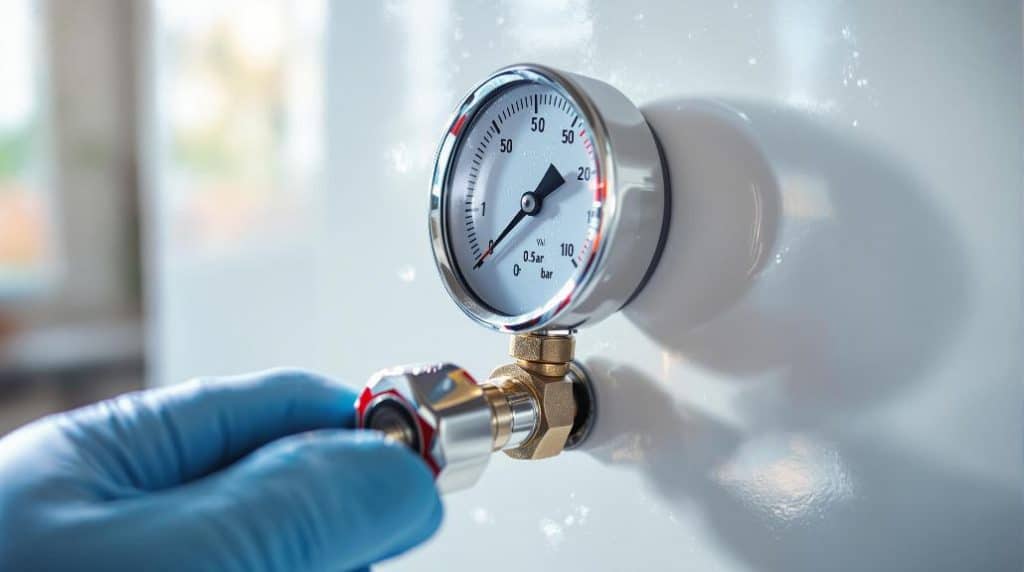
Got low boiler pressure? No worries! First, check for leaks by inspecting radiator connections and looking for any damp spots. Next, repressurise the system by locating the filling loop under your boiler—just attach it, open the valves, and let the pressure rise to 1.5 bar. Finally, bleed your radiators to release trapped air; start from the furthest one, and watch for water flow! These easy fixes can help you regain that cosy warmth. You've got this, and you might even find it's a bit of fun—who knew boilers could be entertaining? Stick around for more handy tips!
Key Takeaways
- Check for leaks by inspecting radiator connections and looking for damp spots or puddles around the system.
- Pressurise the system by using the filling loop to maintain pressure at 1.5 bar.
- Bleed the radiators starting from the furthest one from the boiler to release trapped air.
- Regularly check the pressure gauge to ensure the system operates efficiently and address any drops in pressure.
- Schedule routine maintenance to catch potential issues early and ensure optimal boiler performance.
Check for Leaks
One of the first things you should do when tackling low boiler pressure is check for leaks. Seriously, leaks can be sneaky little devils! Start by inspecting your radiator connections. Look for water stains or paint discolouration on pipes and skirting boards—those are red flags.
If you see puddles around radiators, pipes, or even the boiler itself, you might've a leak on your hands. Don't forget to check the valve connections and underneath the boiler too; moisture tends to hide there.
Now, if you notice any black marks on the ceiling, that could indicate dampness from a leak as well. While you're at it, don't overlook the boiler body. Water pooling at its base is a clear sign something's amiss.
And if you spot cracks in the cast iron sections, that's a serious issue you can't ignore. Finally, examine all visible pipes, especially at joints and fittings. If you see water droplets, you're likely dealing with a leak.
Thames Boilers experts recommend avoiding DIY repairs for major leaks as they could lead to serious complications.
Repressurize the System
Repressurising your boiler system is a straightforward process that can help restore its efficiency.
First, turn off the boiler and give it some time to cool down. Safety first, right?
Next, find the filling loop, usually a flexible hose with valves at each end, located beneath the boiler or in the cupboard.
Now, attach the filling loop securely to your boiler and the cold water supply. Open both valves slowly—start with the one closest to the boiler.
You'll see the pressure gauge start to rise, so keep an eye on it and stop filling once it reaches 1.5 bar. If you overdo it, you might need to bleed a radiator later.
Once you hit that sweet spot, close both valves firmly to avoid leaks.
Give the pressure gauge one last check to verify it's between 1 and 1.5 bar. If it's too low, repeat the process.
Finally, restart the boiler and don't forget to hit the reset button if needed.
Voilà! You've just given your boiler a little boost, and it's ready to keep your home cosy again.
Who knew being a DIY expert could feel this good?
Regular pressure checks are essential for maintaining efficient boiler operation and reducing your energy costs.
Bleed the Radiators
Bleeding the radiators is an essential step in maintaining your heating system's performance. It's like giving your radiators a much-needed spa day!
First, make sure to turn off the heating and let everything cool down—no one wants a scalding surprise. Grab your radiator key, a towel, and a jug to catch any water that might escape.
Start with the radiator furthest from the boiler, as it's usually the neediest. Insert the key into the bleed valve and turn it anti-clockwise. You'll hear a hissing sound—this is just the trapped air escaping, not a monster lurking in your pipes!
When water begins to pour out, promptly close the valve.
Repeat this process for all the radiators in your home. Afterward, turn the heating back on to guarantee everything's warming up nicely.
Keep an eye on the pressure gauge, as bleeding can lower the boiler pressure. If it dips too much, don't hesitate to adjust it back up.
If you notice that cold radiator tops persist after bleeding, you may need professional assistance to check and adjust the radiator balance.
Conclusion
By checking for leaks, repressurising your system, and bleeding the radiators, you can tackle low boiler pressure like a pro. It's amazing how a few simple DIY fixes can keep your home cosy and warm. Just remember, a little maintenance goes a long way! If you run into trouble, don't hesitate to call in a professional. Stay warm, and happy fixing! You've got this!
Need this fixed? I handle boiler repairs in Dartford and Greenhithe every week. Regular boiler servicing helps prevent most of these faults.
George Lane
Gas Safe Registered Engineer (No. 515374) with 20+ years experience in boiler repairs and servicing across North Kent. G3 qualified for unvented hot water systems.
About George